Every payment company has a back office. Almost none of them have a design for it — UI kits draw the dashboard and stop, so the work that fills an operator's day has no reference design at all. Setlon is that reference: nine modules and 70+ screens, drawn to the state a real query returns, with the flow behind every primary action. I designed it, built it and now sell it — $59 on Gumroad, with a free preview on Figma Community.
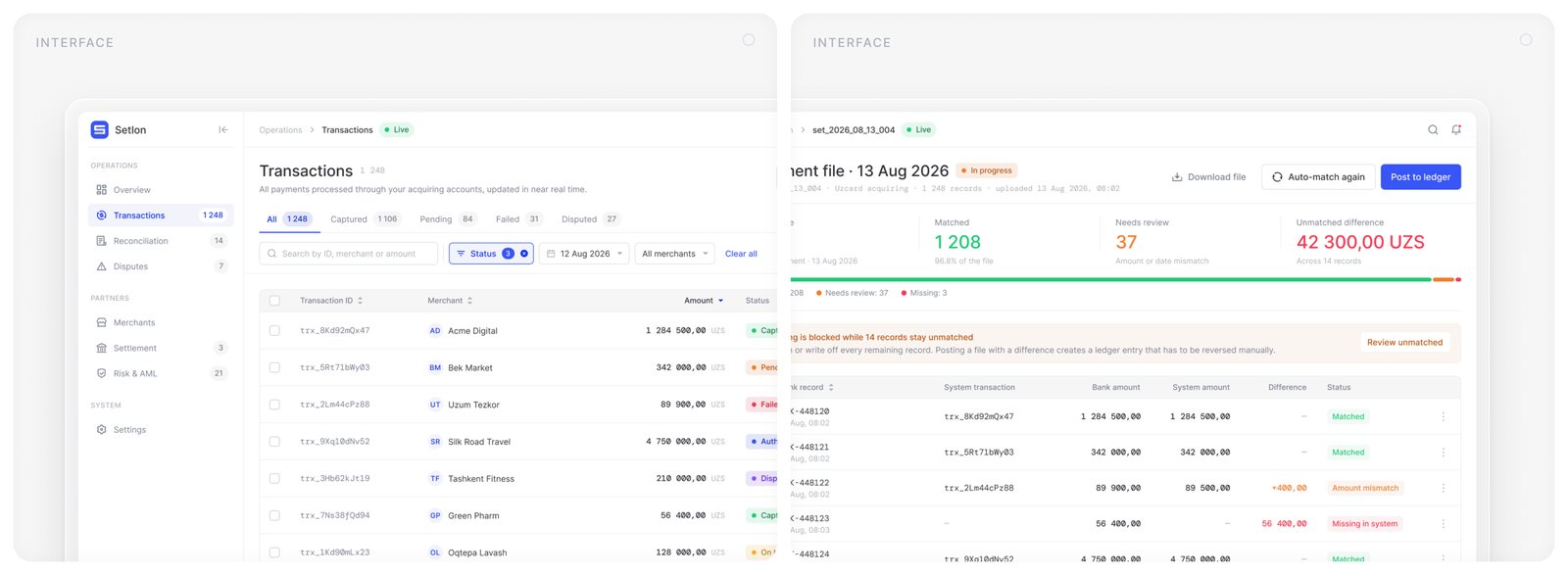
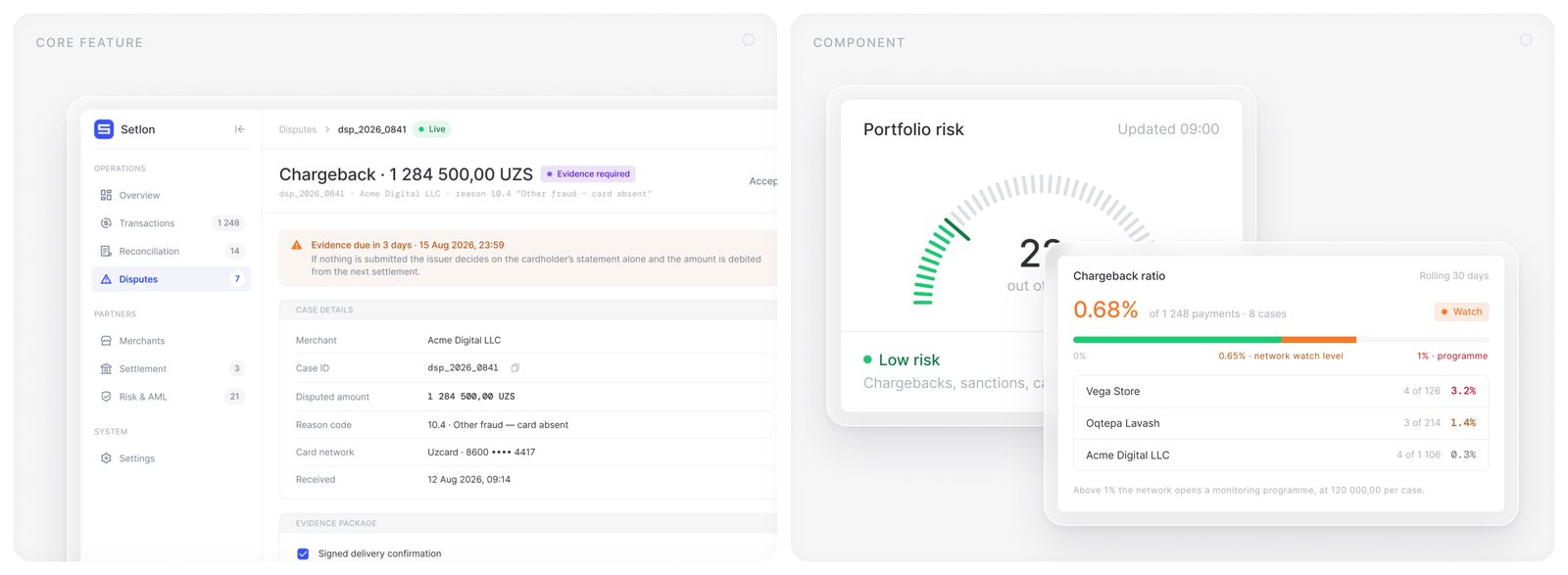
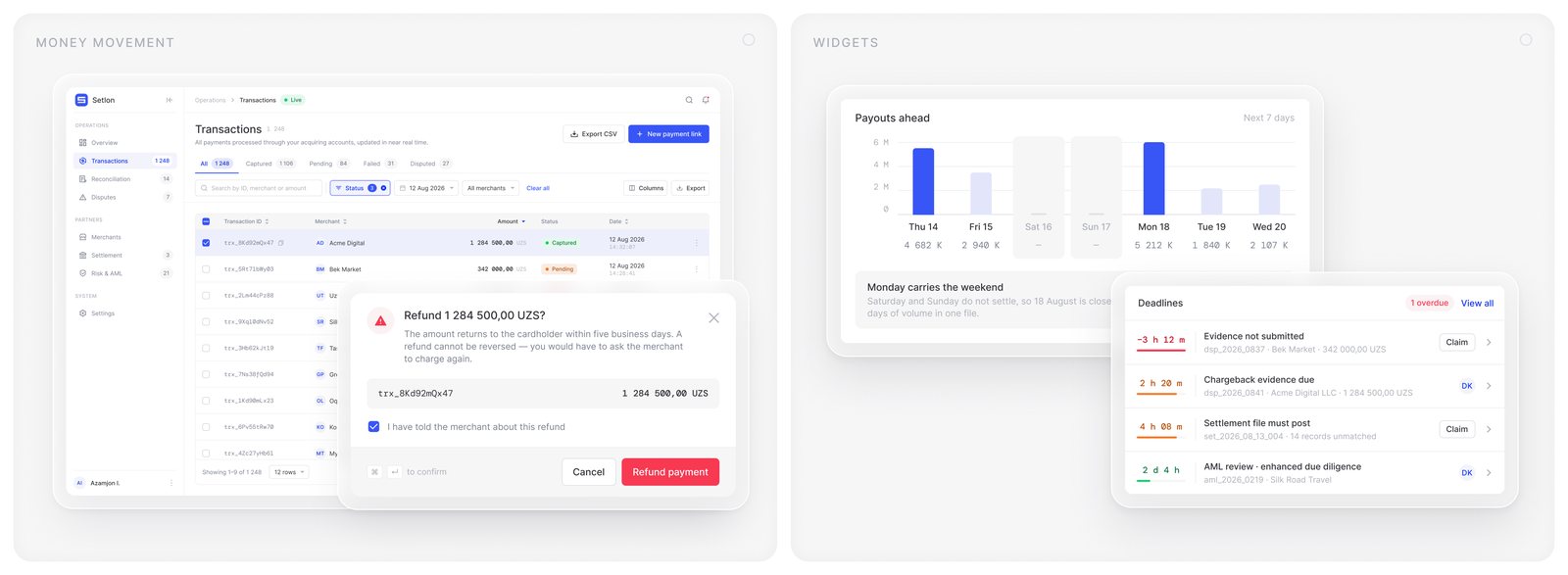
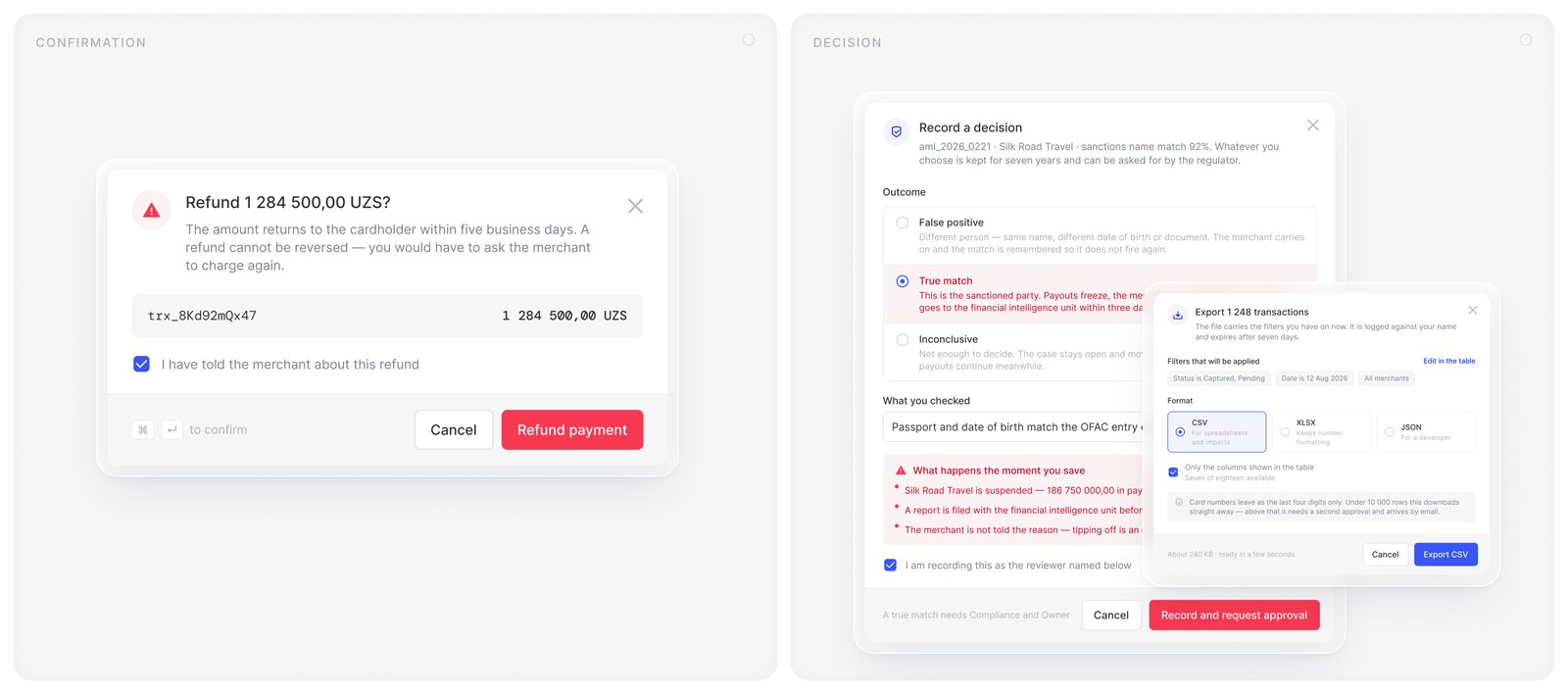
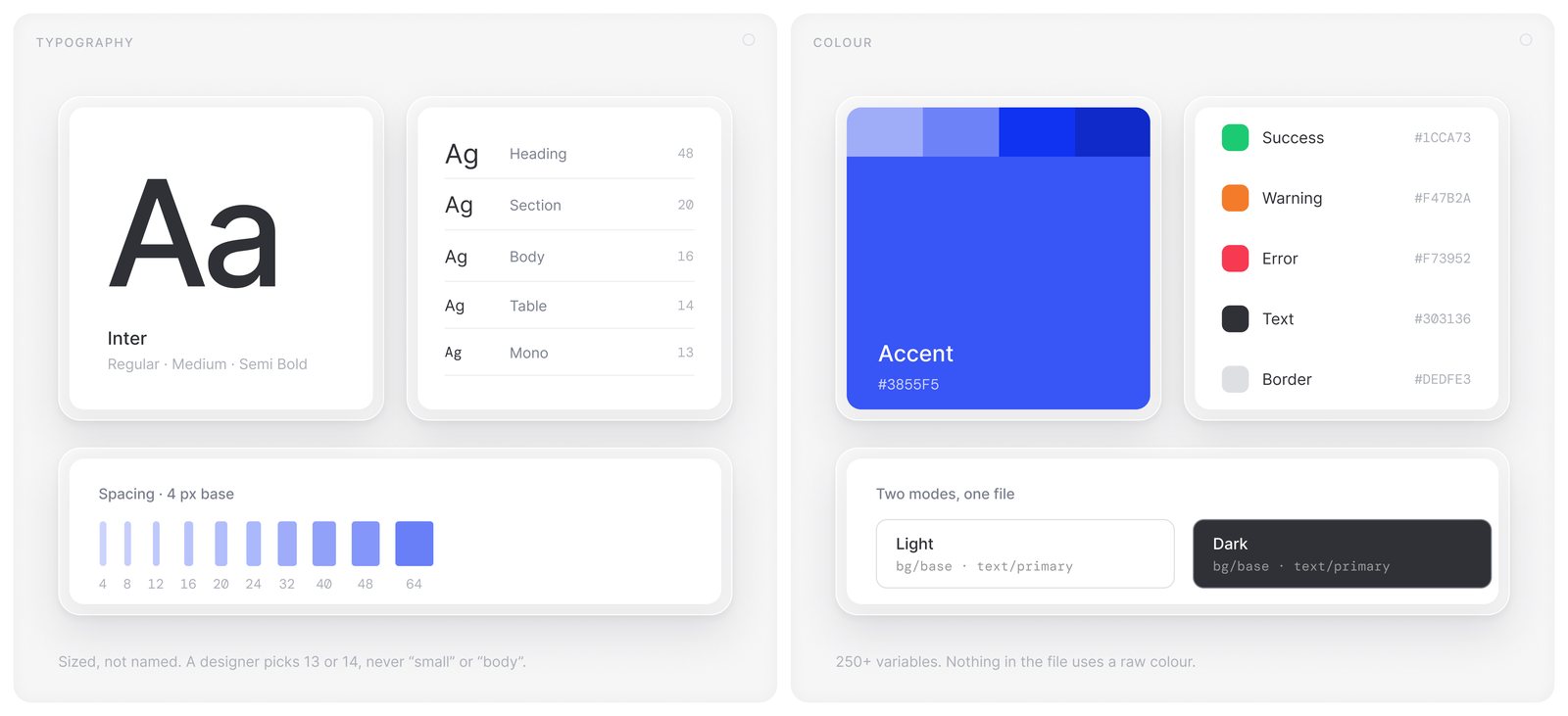
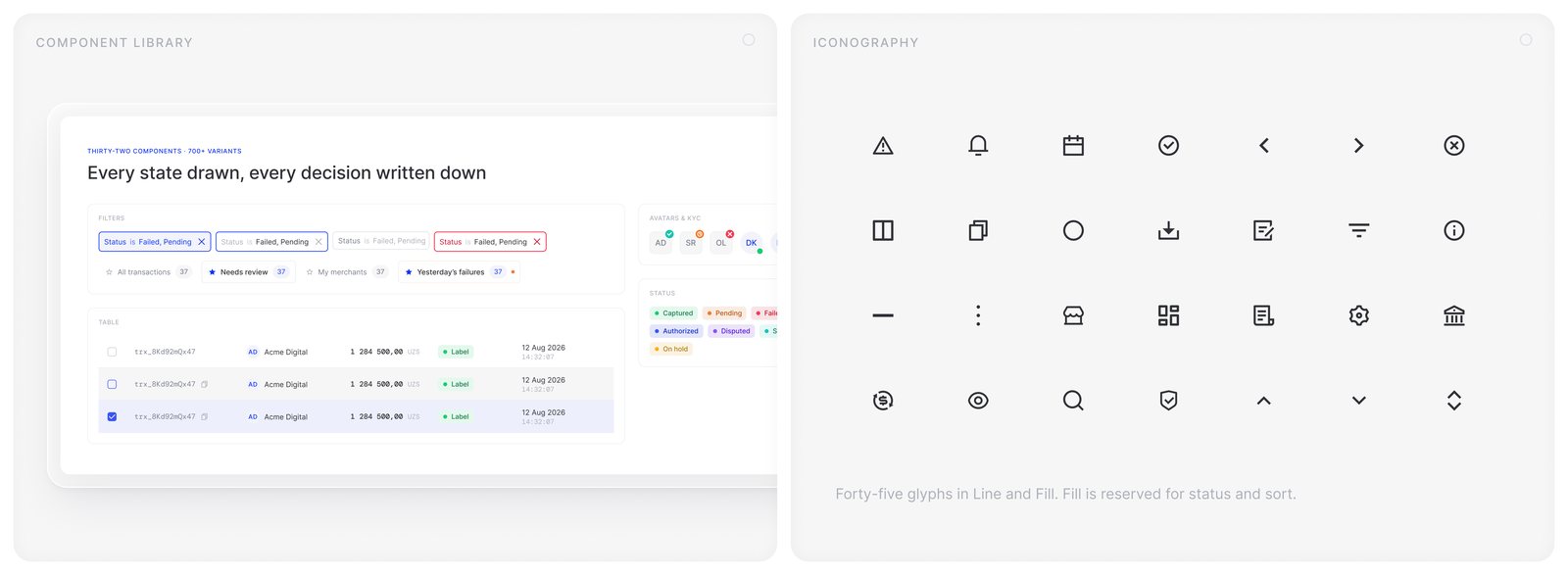
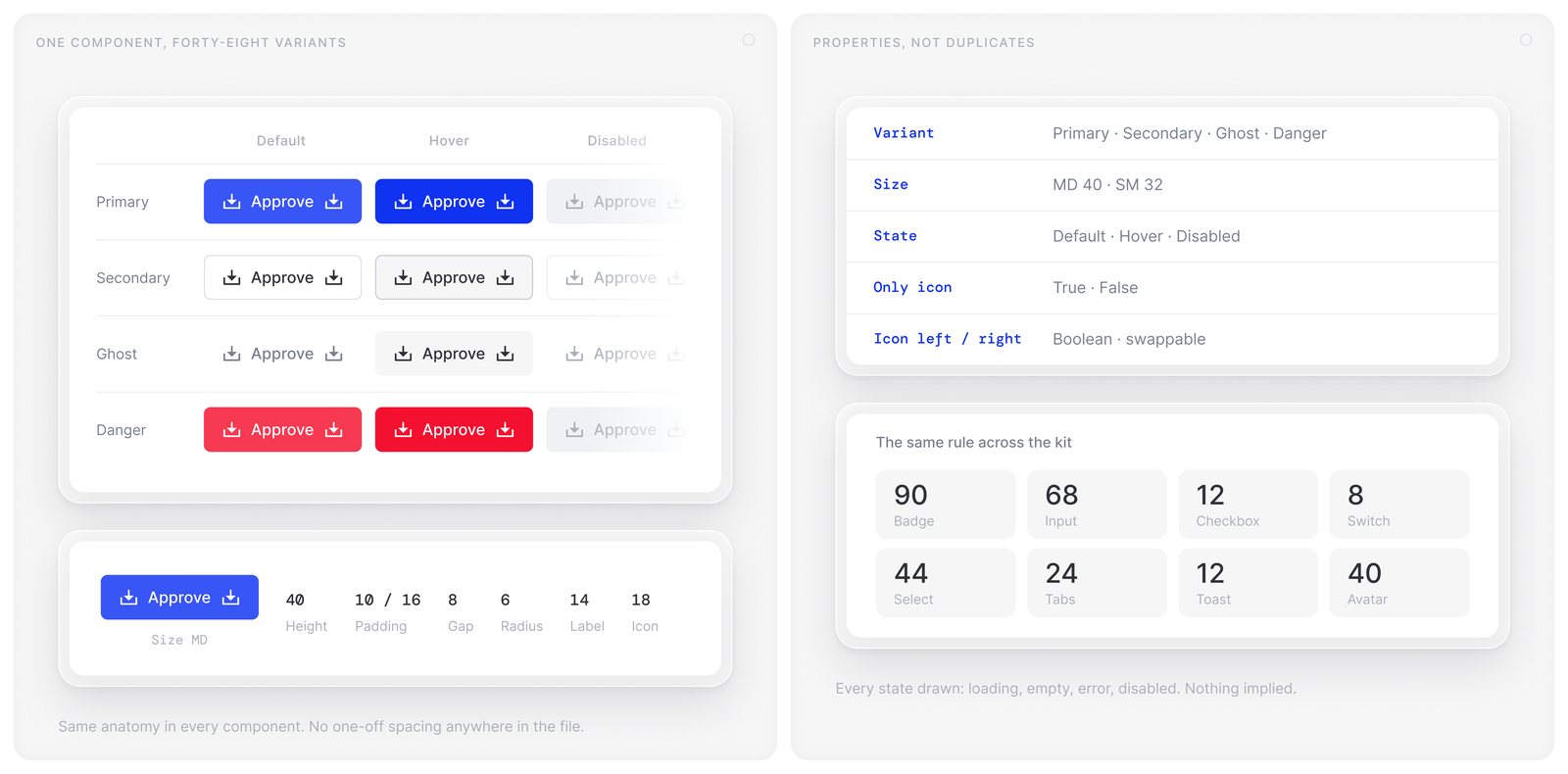
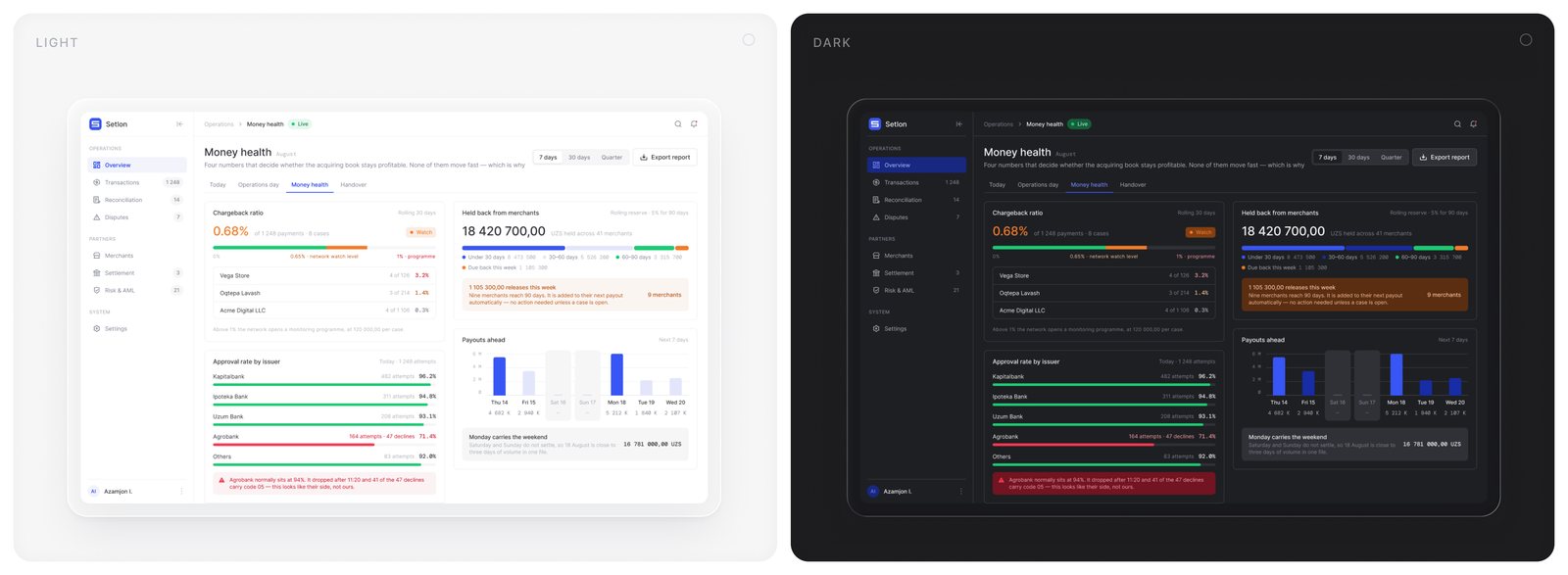
Colour, type, spacing and radius are variables — 250+ of them, and nothing in the file uses a raw value. Light and Dark are two modes of the same screens, not two sets of pages. Thirty-two components carry 700+ variants, so a state is a property, never a duplicate.
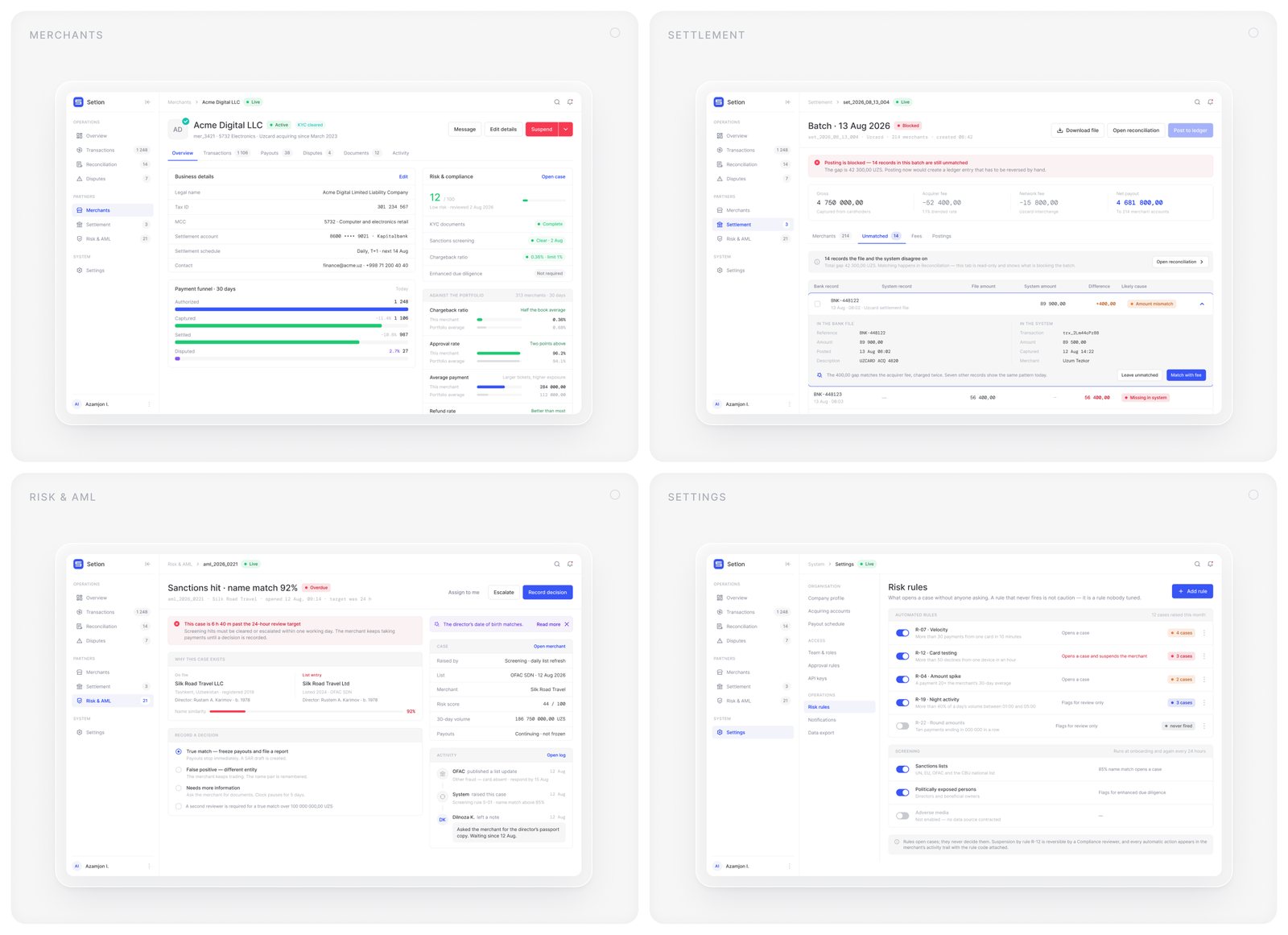
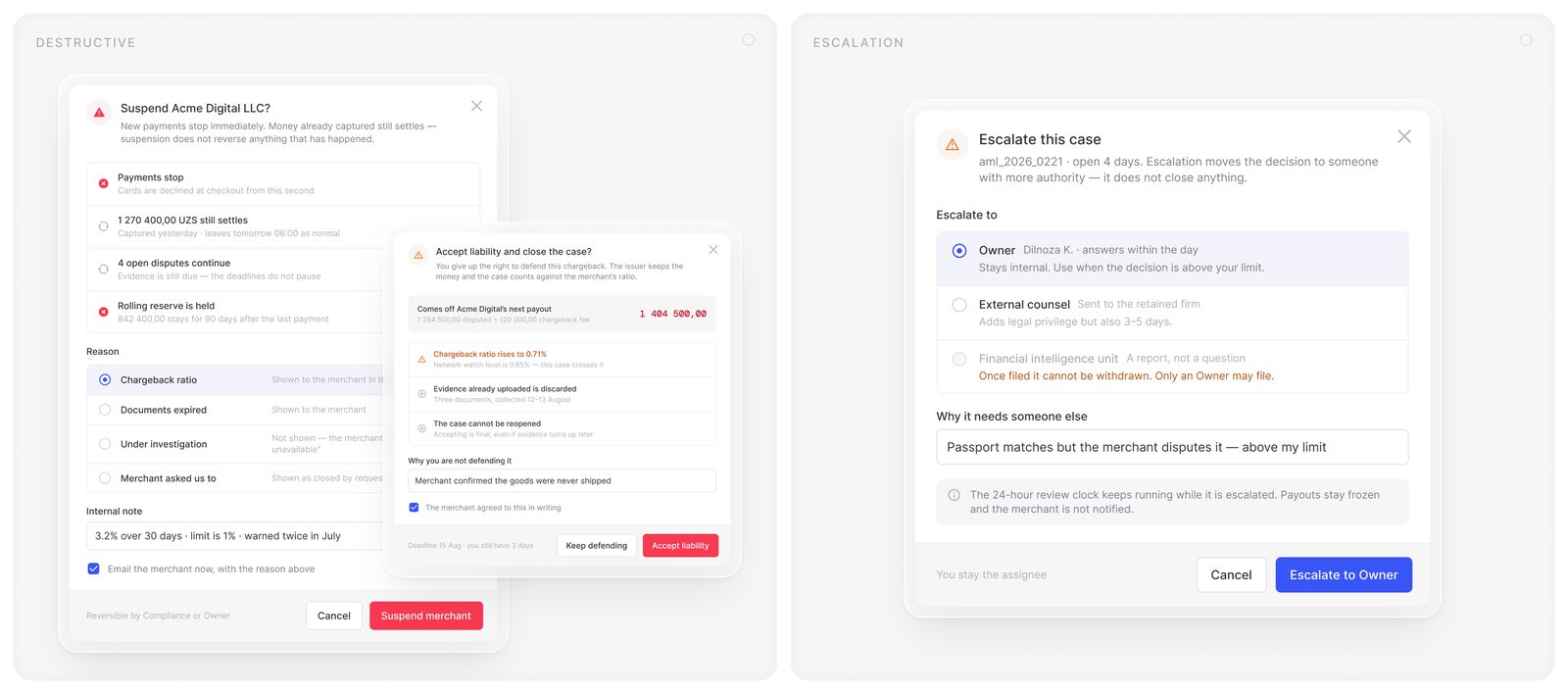
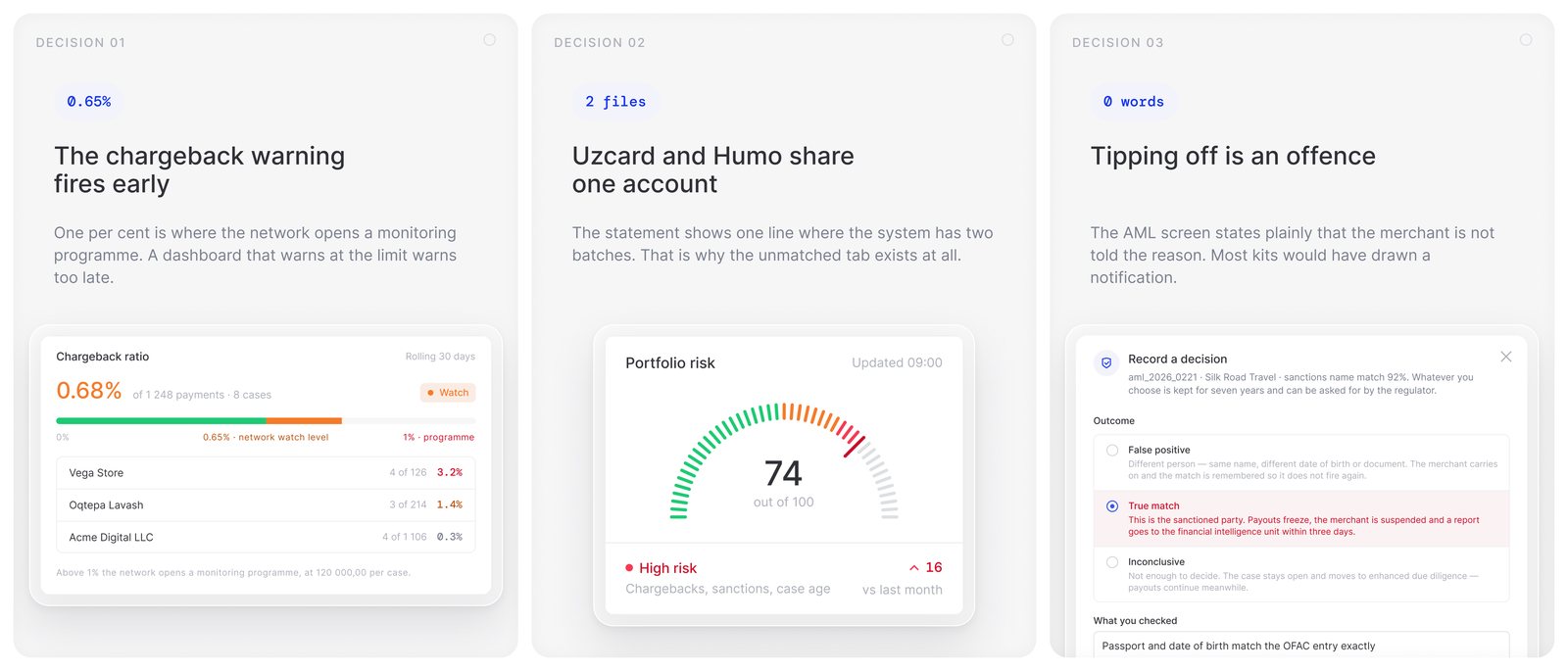
The chargeback warning fires at 0.65%, because one per cent is where the network opens a monitoring programme. Evidence is due from the day the issuer raised it, not the day it reached your queue. The AML screen says the merchant is not told the reason, because tipping off is an offence. These are the decisions that took the longest and show the least.
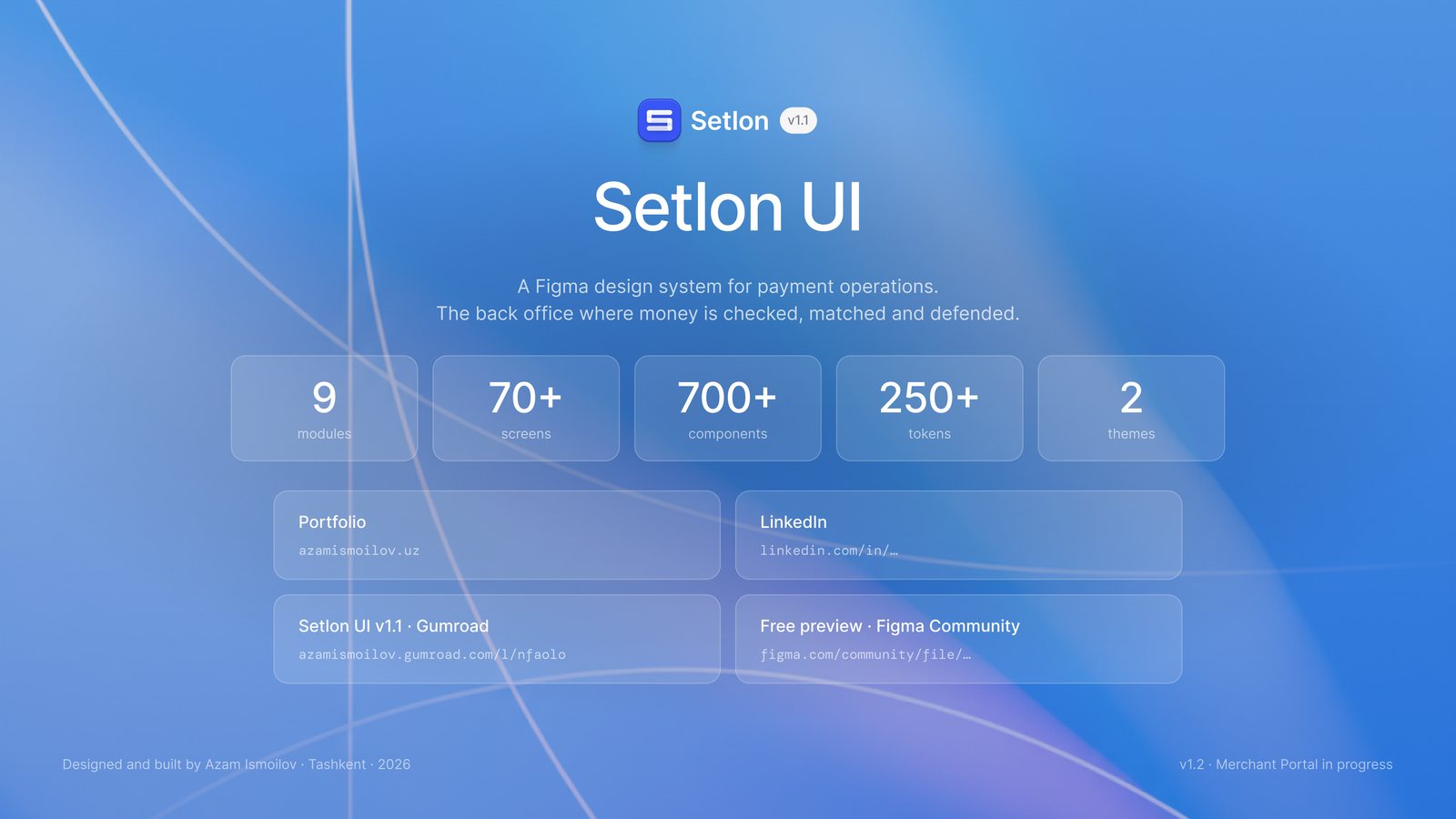
- 700+component variants across 32 components
- 70+screens in nine modules
- 250+tokens — light and dark from one file